

The committee, comprising Dr. Nagesh Kumar, Saugata Bhattacharya, Prof. Ram Singh, Dr. Poonam Gupta, and Dr. Rajiv Ranjan, voted in favour of the rate cut after reviewing the prevailing macroeconomic conditions.
With this adjustment, the standing deposit facility (SDF) rate under the liquidity adjustment facility (LAF) now stands at 5.25 per cent. In comparison, the marginal standing facility (MSF) rate and the Bank Rate have been reduced to 5.75 per cent.
The RBI stated that the move aligns with its medium-term objective of maintaining consumer price index (CPI) inflation at 4 per cent, within a tolerance band of ±2 per cent, while continuing to support economic growth.
Inflation eases, but growth is still below potential
Explaining the rationale behind the decision, Governor Malhotra noted that inflation had moderated significantly—from breaching the upper tolerance band in October 2024 to now falling below the 4 per cent target. The Central Bank revised its inflation forecast for FY2025 downward from 4.0 per cent to 3.7 per cent, citing broad-based moderation, softening food prices, and declining global commodity costs.
While the inflation trajectory appears favourable, concerns persist on the growth front. The RBI acknowledged that economic expansion remains below expectations amid a challenging global environment and ongoing uncertainty. In light of these dynamics, Malhotra emphasized the need to stimulate domestic consumption and investment to sustain and strengthen the recovery.
Shift to neutral stance amid limited policy space
Having already cut the repo rate by 100 basis points since February 2025, the RBI admitted that the scope for further monetary easing is narrowing. Reflecting this, the MPC decided to shift its policy stance from “accommodative” to “neutral.”
“Going forward, the MPC will adopt a data-driven approach and closely monitor domestic and global developments to maintain a balanced path between inflation control and growth support,” Malhotra said, adding that continuous assessment will be key amid the fast-evolving global economic landscape.
Will drive credit demand & encourage private capex — Indian Bank CMD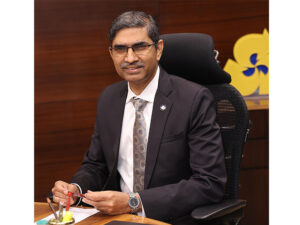
The Reserve Bank of India’s decision to cut the repo rate by 50 basis points to 5.50 per cent and shift its policy stance to neutral is expected to significantly boost credit demand across key sectors such as Retail, Agriculture, and MSMEs, said Binod Kumar, Managing Director and CEO of Indian Bank.
“The CRR cut will infuse liquidity into the banking system. The RBI is taking proactive steps in light of emerging headwinds to credit growth,” Kumar noted. “Lower interest rates are likely to spur retail demand, particularly for affordable housing. A good monsoon combined with lower rates bodes well for the agriculture sector, driving consumption and boosting rural demand.”
He further added that MSMEs—critical to India’s economic engine—will benefit from improved cash flows and greater opportunities to expand. “We are committed to ensuring immediate and effective rate transmission to support entrepreneurs and maintain growth momentum in the economy,” Kumar stated.
Policy easing signals growth: IOB chief
 The Reserve Bank of India’s recent decision to reduce the repo rate by 50 basis points to 5.50% and cut the Cash Reserve Ratio (CRR) by 100 basis points in four tranches marks a decisive policy shift aimed at balancing growth and inflation, according to Indian Overseas Bank MD & CEO Ajay Kumar Srivastava.
“This is a strong and timely move that aligns growth with price stability,” Srivastava said, commenting on the central bank’s latest monetary policy stance.
The RBI also revised its consumer price index (CPI) inflation forecast to 3.7% for FY26, signaling confidence in keeping inflation aligned with its medium-term target of 4%. The CRR cut is expected to inject approximately ₹2.5 lakh crore in primary liquidity, a move that will ease credit conditions across the banking sector.
Srivastava noted that the policy measures reflect a “well-calibrated and thoughtful approach,” with India’s GDP projected to grow at 6.5% in FY26 and maintaining a steady quarterly trend. He added that macroeconomic indicators such as a rise in non-gold imports and a 14% increase in gross foreign direct investment (FDI) point to strong domestic demand and continued global investor confidence in the country’s structural economic resilience.
“We believe this policy decision will provide the necessary momentum for credit expansion in priority sectors, thereby accelerating inclusive economic growth,” he said.
“Boost for MSME lending”
 Tamilnadu Mercantile Bank MD & CEO Salee S Nair welcomed the RBI’s move to cut the repo rate by 50 basis points to 5.5%, calling it a “strategic and growth-focused step” in the face of global economic uncertainty and geopolitical tensions.
 Tamilnadu Mercantile Bank MD & CEO Salee S Nair welcomed the RBI’s move to cut the repo rate by 50 basis points to 5.5%, calling it a “strategic and growth-focused step” in the face of global economic uncertainty and geopolitical tensions.
Highlighting India’s resilience through strong rural demand and urban recovery, Nair said the early rate cut, paired with sub-4% inflation projections, reflects confidence in India’s macroeconomic stability and the need to spur demand in key sectors.
He added that the bank sees this policy as an opportunity to expand credit, particularly to MSMEs and rural enterprises—“the backbone of India’s economy.” The reduced interest rate atmosphere offers essential relief to borrowers and will aid in capital expenditures and working capital requirements.
Nair also welcomed the RBI’s decision to reduce the Cash Reserve Ratio by 100 basis points over the year, saying it will bolster system-wide liquidity and strengthen banks’ ability to lend.
“TMB is committed to leveraging these supportive policies by investing in digital onboarding, analytics and mobile-first services to improve reach and turnaround times, especially in semi-urban and rural areas,” Nair said. “These steps will help drive inclusive development and customer-centric banking.”

