


According to data published by the United Nations Environment Programme (UNEP), the textile industry is estimated to use around 215 trillion litres of water every year. It has also been reported that approximately 15,000 types of chemicals are used in textile manufacturing. Some of these chemicals remain in the environment for decades, severely affecting water, soil, and living organisms. Several rivers that once served agricultural and drinking water needs have become toxic. A prominent example is the Citarum River in Indonesia. Waste discharged from more than 2,000 factories led to the loss of 60 per cent of the living organisms in the river. Efforts are now underway to protect and restore it.
The damage caused to the Noyyal River, which flows through Tiruppur district in Tamil Nadu, was many times more severe than that suffered by the Citarum River. During 1999–2000, waste discharged from more than 700 dyeing units turned the Noyyal into a black, sewage-like stream. It was declared a “dead river”. The Orathupalayam Dam, built across the river, also became a repository for chemical waste. The Total Dissolved Solids (TDS) level in the dam’s water reportedly rose to as high as 7,900 milligrams per litre. Heavy metals such as chromium, copper, zinc and lead accumulated in large quantities in the sediment at the bottom of the dam. The impact extended beyond the river, affecting groundwater and agricultural land as well. Reports also emerged that tender coconuts harvested from nearby coconut trees had changed colour.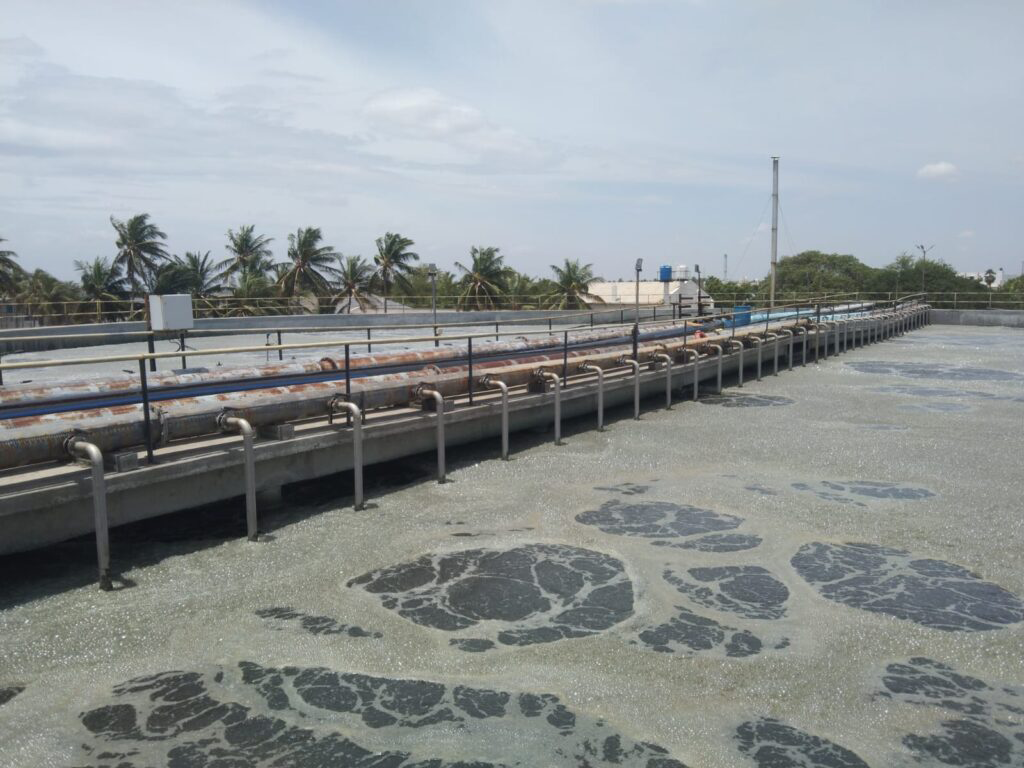
Court Orders to Regulate Pollution
On December 22, 2006, the Madras High Court ordered the closure of dyeing and bleaching units in Tiruppur that failed to comply with pollution control regulations. Legal proceedings continued, and the Supreme Court also delivered its judgment in the case on October 6, 2009. Subsequently, on January 28, 2011, the Madras High Court issued an explicit order directing the immediate closure of dyeing and bleaching units in Tiruppur, along with their Common Effluent Treatment Plants (CETPs) and Individual Effluent Treatment Plants, until they implemented the Zero Liquid Discharge (ZLD) system.
These orders severely affected export trade and the livelihoods of thousands of workers. According to information from the Government of India’s Press Information Bureau (PIB), electricity and water supplies to 18 Common Effluent Treatment Plants (CETPs) were disconnected. In addition, 68 Individual Effluent Treatment Plants were also subjected to action.
To revive the textile industry, the Tamil Nadu government allocated Rs 179.34 crore in 2011, during the tenure of former Chief Minister J. Jayalalithaa, to upgrade 18 Common Effluent Treatment Plants. After installing ZLD technology and obtaining permission to operate on a trial basis, the units gradually resumed operations from June 2012.
International Markets Impose Stringent Regulations
According to the Tiruppur Exporters’ Association, Tiruppur accounts for around 55 per cent of India’s knitted garment exports. Companies in Tiruppur exporting garments to international markets are required to comply with stringent global regulations. Hazardous substances such as heavy metals and azo dyes must remain within the prescribed limits. Standards such as EU REACH and US CPSIA set requirements in this regard.
Similarly, companies must submit information about their entire supply chain, including the origin of the cotton used in their products, under the United States’ Uyghur Forced Labor Prevention Act (UFLPA). Companies also obtain international certifications and standards such as OEKO-TEX Standard 100, Global Organic Textile Standard (GOTS), Sedex/SMETA and BSCI.
To benefit from potential tariff concessions under the India-European Union Free Trade Agreement (India–EU FTA), companies must also fulfil the agreement’s requirements, including conditions relating to the origin of raw materials.
Technology Comes to the Rescue
Technology plays a crucial role in helping companies that export to international markets operate without disruption. In particular, Zero Liquid Discharge (ZLD) technology has become important.
Under this system, wastewater generated during dyeing and bleaching processes is treated and reused in production. The remaining salts and solid waste are separated, making it possible to avoid discharging liquid waste into water bodies. ZLD therefore helps conserve water, control pollution in water bodies such as the Noyyal River, and meet the environmental requirements of international markets.
However, CETP operators have expressed concerns that some of the excess Brine salts generated through this process have no practical use, leaving them uncertain about how to dispose of or manage them. They have urged the government to take action to address this issue.
Tiruppur Moving Towards Change
Even after the implementation of ZLD, salinity and pollution continue to be found in groundwater in certain areas near the Noyyal River. One reason is that pollutants that had already accumulated in the groundwater and soil do not disappear immediately. Efforts are underway to address and remediate this existing contamination.
Beyond ZLD, initiatives to restore water resources and improve green cover are also being undertaken in Tiruppur and the areas surrounding the Noyyal River. Through such efforts, Tiruppur is gradually correcting the mistakes of the past and moving towards change.

