



Another year has passed. And along, with it, another set of memories – good, bad and ugly. As part of the year end issue, IE continues highlighting ten major happenings. From wars and technology shifts to India’s rise and China’s concerns, the year witnessed a see-saw effect when it came to navigating growth, inflation and geopolitics.
PS: The annual caveat still holds – this is not THE top-10 list. It is, but just a list. So, with this preamble, here are the ten events that had (in my humble opinion) the most widespread repercussions globally.
India’s moon landing success
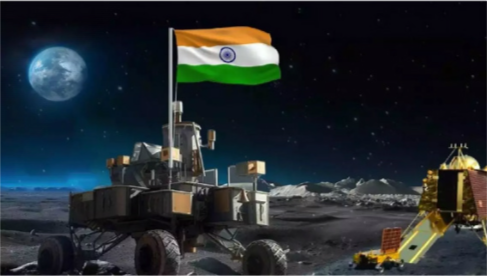 India became only the fourth country in the world to pull off a successful lunar landing with the Chandrayaan-3 spacecraft. The mission cements India’s space prowess not only for the landing but more importantly for a couple of other reasons – the location and the cost. It’s the first time any country has had their lander close to the moon’s south pole. Previous attempts had failed (including one from Russia just a few weeks ahead of India’s). The presence of ice and water deposits in this region is expected to fuel the next era of exploration. The “out-of-the-world” aspect of this mission was the costing. At USD 75 million, it was a fraction of the costs of similar missions from the US, Russia and China. In fact, it is even cheaper than space movies like Gravity or The Martian!
The Israel-Palestine conflict
 Even the title of what to call this section is fraught with polarised views. The Israel-Palestine conflict, a focal point of international attention for decades, entered a dangerous and sad phase towards the latter part of 2023 with the brutal attack by Hamas. Caught completely unaware and feeling both foolish and enraged, Israel’s counter-offense is decimating Gaza, causing massive casualties to people and property. Both sides have legitimate grievances and the peace process, unfortunately, has been stymied by mutual distrust, internal political divisions and external influences. The war has spilled onto college campuses and corporate boardrooms globally and the levels of polarisation based on both ignorance and prejudice have gotten crazier by the day. We hope that 2024 brings some more permanent solution to this madness where an eye for an eye is making everyone blind.
A pivotal year for Russia
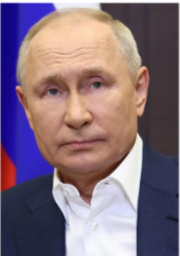 2023 has been a consequential one for Russia – the war with Ukraine had not been going well with loss of Russian troops, equipment and occupied territory. If there is one person that must have been relieved by the distraction from the Israel-Palestine conflict, it must have been Vladmir Putin. The world was forced to focus on the more recent issue giving Putin a breather from all the bad news and bad press.
The challenge posed by his one-time-close confidant – Yevgeny Prigozhin, who led the Wagner Group, a private military organisation that blurred the lines between state and private player engagement in modern warfare – seemed to have opened some fissures in Putin’s hold on Russian politics. Not surprisingly, the bravado fizzled quickly, compromises were made and there was the plane “accident” that killed Yevgeny Prigozhin.
Ukraine’s pathway towards both reclaiming their lost lands and membership into the European Union became more difficult given the focus elsewhere, reduced funding pipelines and the veto by Russia’s ally Hungary.
The devastating earthquake in Turkey and Syria
 In February 2023, a huge 7.8 magnitude earthquake in southeastern Turkey and near the Syrian border, caused incredible havoc. More than 55,000 lives were lost, thrice as many were injured and millions were displaced.
Natural disasters are always hard to pinpoint, predict and prevent but when the soul-searching began, it appeared, some aspects could have been addressed. Construction efforts in Turkey were not regulated as strictly as they should have been. The fact that many of the key emergency facilities (including hospitals, airports and ironically, even an emergency response center) were in the very region and majorly affected by the quake, didn’t add credence to the response mechanisms.
The regions affected contribute around 15 per cent of the country’s GDP and while that won’t significantly impact the overall prospects for the country, Turkey’s runaway inflation and bad fiscal policies are expected to cause a USD 34 billion dent nevertheless. The more significant damage is the cost of human suffering – especially near the Syrian borders and among the refugee population – that have had to endure this, amidst so many existing concerns.
China is still struggling and it’s both good and bad news
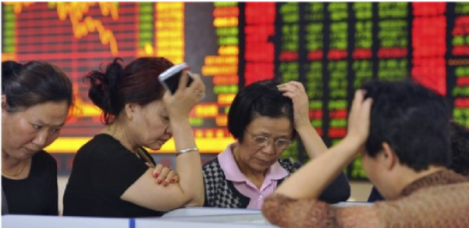 In 2023, the narrative surrounding China’s economic and global ascent, which has been dominant for several decades, appears to be losing some of its luster. Several factors contribute to this shift in perception.
On the economic front, an aging population, reduced labour force participation, the diminishing returns of debt-fueled projects and the massive struggles of the real estate sector have severely dampened growth. The crackdowns on private enterprise – especially with the technology sector – have wiped the sheen off for the industries. Added to this is the change in earning and spending patterns that drives the economy.
2023 didn’t help alleviate the increasing geopolitical tensions, particularly with the United States and other Western countries – whether on trade disputes, concerns over technology and cybersecurity and territorial tensions in the south China sea.
The decoupling of the manufacturing and supply chain aspects from China have meant that several other countries have benefited – including India. The world’s eyes seem to be on India even more now, as a viable counterweight. The time is ripe and we need to ensure that we don’t shoot ourselves in the foot internally (creating our own geopolitical concerns or internal democratic concerns – see India piece next).
It’s India’s year in so many ways (and a caution)
While mostly positive, 2023 has been eventful for India. The nation’s presidency of the G20, a historic moon landing, political victories, and unfortunate communal and geo-political tensions have all painted a mixed picture.
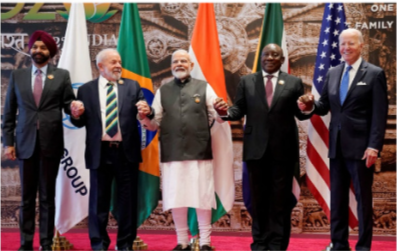 The year started so well for India. Its presidency of the G20 in 2023 is a moment of pride and a testament to its growing influence on the global stage. Hosting the G20 summit has also allowed India to foster deeper diplomatic ties and present itself as a key player in shaping the global economic and political discourse. This sheen was dulled with allegations by Canada around India’s involvement in the killing of a Sikh national in Canada. The resultant arguments by both countries played out on the world stage with accusations and symbolic and real repercussions. The more egregious concern came in a few months later with the US alleging the foiling of another plot and the Indian reaction was much more circumspect.
Overall, the country grew at a healthy pace fueled by a young workforce, lower energy import costs, global players creating more manufacturing hubs, amongst others. India is expected to pass Germany and Japan to become the third-largest economy in the world by 2033.
BJPs election victories in several states in 2023, further consolidated the party’s political dominance. The victories indicate the electorate’s trust in the prime minister’s vision for development but also cause worries around the lack of a viable and strong opposition. The recent drama with the suspension of the 140 MPs is another distraction that shouldn’t have happened in the first place. Dissension is an integral part of both politics and democracy and when the two come together in places like India, it must be accommodated and better navigated.
US continues to be strong but…
 The US economy in 2023 has shown resilience amidst global economic challenges. While growth rates were not very high, the steady GDP was a huge plus. The ongoing balancing act between stimulating the economy and managing inflationary pressures seems to have worked with both inflation tamed and unemployment at historical lows. The dollar remained robust through the year, bolstered by the Federal Reserve’s policies and the U.S. economy’s strength, and that helped consumption and investment.
Politically, the landscape has been marked by three major happenings. First, it was the drama surrounding the speaker of the house, reflecting the deep divisions within the political parties and the challenges in governance and legislative action. Second, the former President Donald Trump’s various legal challenges (and resulting in the first President to be criminally charged) kept him in the national spotlight and also affecting the political discourse and party dynamics within the Republican party. On the other side, Hunter Biden (the current President’s son) has his own legal troubles and charges. Third, the upcoming elections in 2024 meant that the political climate was further shaped by parochial campaigns, candidate positioning, social media blitzes and several false narratives.
Sam Altman, Microsoft investment and AI race
 2023 witnessed significant developments in the field of Artificial Intelligence (AI), particularly with the rise of ChatGPT and the influence of figures like Sam Altman. These advancements, alongside corporate dynamics such as board decisions and partnerships with tech giants like Microsoft, have painted a complex picture of AI’s growing impact on technology and society.
OpenAI made AI a household name thanks to its offering, ChatGPT. Even though launched in 2022, ChatGPT 4 launched in March 2023 exponentially altered this field. Others followed quickly. Google released Bard, Microsoft launched Bing Chat and several smaller players entered with their own technologies. But OpenAI reigned supreme. It continues to transform the way people understand and use AI technology. Its ability to craft human-like responses have opened up many new sectors – from programming and learning to answering question papers and conducting research.
The company’s board of directors suddenly fired Sam Altman, the CEO stating they lost trust in him. Not many details were forthcoming. OpenAI’s lead investor Microsoft, and most of the employees protested openly and suddenly Sam was back at the organisation. This time, the board resigned. Still many questions remain unanswered, and one will wonder how artificial or real the board’s intelligence was with the decision!
The coronation – 70 years since the last one
 In May, the coronation of King Charles and Queen Consort Camilla took place. Thousands braved some wet weather to watch their gold stagecoach procession. The USD 140 million religious ceremony in London’s Westminster Abbey and other formal ceremonies saw more than 2200 invited guests and was followed by a weekend of celebrations. Camilla was also crowned with the Queen Mary Crown — something one thought wasn’t likely, given that she was ridiculed, not until long ago for being Prince Charles’ mistress. The palace also dropped “consort” from Camilla’s title, to slowly start her settling into her new role.
Global climate unpredictability hit a new high
Every year, there are new warnings – and 2023 was no exception. It was the hottest year on record and one that will negate all the agreements made during the 2015 Paris climate agreement. Massive earthquakes in Turkey, fires in Hawaii, floods in India, and volcanic  eruptions in Iceland – these were just a few of the once-in-a-lifetime events that caused large scale devastation. Climate change has moved from being a concern of the future to something that is impacting life, as we know it today.
Milder winters are wrecking havoc on the global ski industry, expansive wildfires have wiped out many homes and regions and drought-linked water level shifts have meant that the Panama Canal is so dry, that only a third of the ships can pass through every day. The last one has created severe backlogs, and extra costs of up to USD 4 million, each time a ship passes through the 80 km channel.
Water – or lack of it – continued to be a big concern, impacting both agricultural, transportation and leisure segments of the economy. The fear is that most conflicts in the future will center around this key resource.
These were the top events that impacted people and economies to a large extent. We also had some “also-rans” that didn’t make to the list – the Titan submarine explosion, Twitter becoming X (and the drama surrounding the transition), The United Auto Workers strike in the US and impacts on global auto industry, the Nagorno Karabkch (the self-governing, Armenian region) being dismantled…

