


The project, which will use solar power to generate green hydrogen, aims to produce up to 300 kg of hydrogen per day with a purity level of 99.999%. The plant will operate during sunshine hours, contributing to India’s growing green hydrogen ecosystem.
“It is in the advanced stage of procurement of electrolysers. On commissioning, this will position NLCIL among the early movers in India’s green hydrogen economy, paving the way for large-scale adoption in future,” Prasanna Kumar Motupalli, Chairman & Managing Director of the company, said in the company’s latest annual report.
The proposed pilot facility will use Proton Exchange Membrane (PEM) electrolyser technology and will produce hydrogen through electrolysis powered entirely by renewable energy. This ensures zero greenhouse gas emissions and supports national decarbonisation goals.
The initiative is aligned with the National Green Hydrogen Mission, under which NLCIL floated a tender for the project on February 19, 2025. The project is a key part of NLCIL’s strategic shift toward sustainable energy solutions.
In another significant step toward energy diversification, NLCIL is planning a Lignite to Methanol Project with a production capacity of 0.40 million tonnes per annum (MTPA). This project is aimed at bolstering India’s energy security and contributing to its clean fuel roadmap.
“Although the revised Detailed Project Report (DPR) has flagged cost escalation and financial viability challenges due to current methanol market prices, NLCIL remains engaged with stakeholders and is actively evaluating options for the project’s future development,” he said.
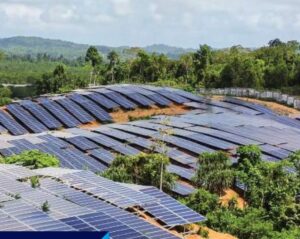
In a pioneering move to maximise land use efficiency, the ₹15,283 crore NLCIL is developing a 50 MW solar power project in the backfilled area of Mine-II — a first-of-its-kind initiative in India. This project reflects the company’s innovative approach to integrating renewable energy development with responsible land rehabilitation.
Additionally, the company is implementing 4 MW of rooftop solar and 1 MW of floating solar projects at Neyveli and across its joint venture (JV) companies. These efforts are part of a broader renewable energy strategy designed to expand clean energy capacity while adhering to sustainable land management principles.
Several renewable energy projects of the company are nearing commissioning, collectively contributing to a meaningful increase in NLCIL’s clean energy footprint.
“We aspire to achieve 104.35 MTPA mining capacity, more than 10 GW in thermal power capacity, and 10 GW in renewable energy capacity by 2030 — in alignment with and contribution to the Government of India’s energy security and clean energy goals, and continuous reduction in carbon intensity through supercritical and emerging clean technologies,” he said.
“The coming year holds tremendous promise for the company, as several of our major projects move towards commissioning and critical milestones,” he added.