

The initiative seeks to raise female labour force participation by addressing systemic barriers and expanding support infrastructure, according to an official statement.
The $150 million loan from the International Bank for Reconstruction and Development (IBRD) has a 25-year maturity with a five-year grace period.
Tamil Nadu has one of the highest female workforce participation rates in India, yet the gap between male and female participation remains at 32 percentage points. Most women are employed in agriculture or informal, low-paying jobs.
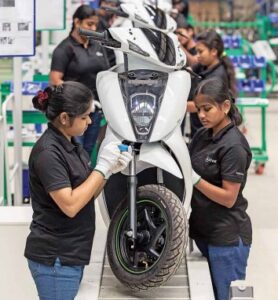
As the state targets a $1 trillion economy by 2030, the government is intensifying efforts to bring more women into the formal labour market, especially in high-growth sectors like electronics and automobiles.
Auguste Tano Kouame, the World Bank’s Country Director for India, said the operation would support women in achieving their aspirations of joining the workforce and contributing to Tamil Nadu’s goal of becoming a one trillion-dollar economy. He noted that the programme aims to do so by equipping women with skills, expanding access to finance, and improving the availability of key enabling services such as crèches, safe hostels, and transportation.
The programme is also set to enhance the state’s capacity, foster technical partnerships, and strengthen institutional frameworks for women’s employment. This includes developing a common results framework, implementing the Tamil Nadu Women’s Policy, and establishing regulatory tools to encourage investments in non-farm employment and support for women entrepreneurs.
WESAFE will provide skills training and career support to over 600,000 women and offer incubation support to 18,000 women entrepreneurs. It will also expand access to essential services, including child care, elder care, transportation, and hotline support for women facing harassment or abuse.
The program aims to strengthen institutional capacity and technical partnerships, including the rollout of the Tamil Nadu Women’s Policy and the development of regulatory tools to promote non-farm employment and women-led enterprises.
Muderis Abdulahi Mohammed and Pradyumna Bhattacharjee, Task Team Leaders, noted that the initiative will foster collaboration with industry bodies, academic institutions, and private firms to improve housing and mobility for women workers, students, and entrepreneurs.
A state-level platform supported by private capital will also be developed to expand access to finance and raise awareness of financial instruments such as loan guarantees and micro-grants.

