



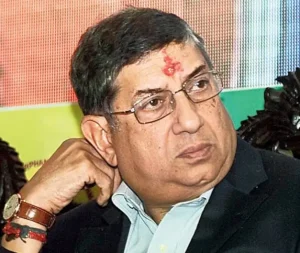
 “When India Cements won the bid for the Chennai IPL franchise in 2008, sports franchising was uncharted territory in India. While most owners treated franchises as corporate assets, N. Srinivasan, NS as is popularly known to many, approached the project with an intuitive understanding of local sentiment, emotional equity and community building,” says Rakesh Singh, Executive Director of CSK.
Right from the word go (should we say even before the first ball was bowled in the IPL), there was a clarity in the thought process and the vision in NS was fully in evidence.
“The early days of the franchise — even before the name “CSK” existed — highlighted his visionary leadership through two landmark decisions,” he says. A defining moment in the formation of CSK was the manner in which Srinivasan sought to leverage the ’emotional equity’.
The Masterstroke
When former captain of Indian cricket team and Chennai icon Krishnamachary Srikkanth approached the franchise, many corporate leaders would have slotted him into a rigid administrative or coaching role. But, Srinivasan played a different stroke. “Before the marketing team could even draft a blueprint, NS bypassed corporate bureaucracy. He sent a swift, decisive slip to his marketing head: “Shall we make him our Brand Ambassador?”
By slipping Srikkanth in a promotional spotlight rather than an operational one, Srinivasan leveraged Srikkanth’s explosive charisma, unfiltered energy and deep connection with the Tamil diaspora.
“The subsequent Srikkanth ad did not pitch a corporate-owned cricket team. It rather pitted Chennai’s own team. It gave the new franchise immediate local legitimacy,” says Rakesh Singh. This one act indeed gave instant authenticity to CSK!
Crowd-sourcing innovation
More than this act of leveraging the emotional equity of the people of Chennai, what made CSK such a popular franchise was the innovation employed by Srinivasan in crowd-sourcing. That, in a way, helped to democratise the franchise. In the pre-digital era of 2008 — long before the ubiquity of smartphones Twitter, or Instagram— NS and his team made the unprecedented decision to let the public choose the franchise’s name. “By opening the naming rights to the public, the franchise achieved the ultimate marketing goal: turning consumers into stakeholders. It was no longer “the India Cements team”. It belonged to the fans,” points out Rakesh Singh. That was indeed a strategic brilliance and a non-digital miracle. “Securing over 22,000 entries via physical coupons, letters and early-stage SMS/emails was a staggering feat of engagement for that era. It proved the latent passion of the local fanbase,” he says.
Dual Purpose
The chosen name, Chennai Super Kings, achieved a dual purpose. It paid a subtle homage to India Cements’ flagship brand (Coromandel Super King) even while maintaining an absolute alignment with the fans who suggested it. “To this day, CSK remains the only IPL team to successfully crowdsource its identity,” he claims.
“What NS understood better than almost any other owner in 2008 was a fundamental truth of sports business: On-field performance fluctuates, but tribal loyalty is permanent,” Rakesh Singh says.
“By fusing the local heroism of Srikkanth with a democratic, fan-first naming process, the foundation of the “whistle podu” culture was laid out even before a single ball was bowled in the IPL. It transformed a cricket team into a cultural institution”, he says.