



India is celebrating its 75th independence. For a country that was left behind in abject poverty, India has risen against all odds and today holds a reputable global position. It is the fifth largest economy following US, China, Japan and Germany. India is expected to grow at an average rate of 6.3 per cent and become the third largest economy by 2030. It is at the prime time of benefitting from its youth power and this will propel growth.
This decade is termed to be India’s. Any action taken now, will have a great impact on our growth. To discuss this in detail, Industrial Economist organised a seminar on 25 January on the theme, taking stock, planning ahead, marching forward.
Experts from various fields addressed the pain points that need to be addressed for India to grow exponentially. Excerpts from the seminar.
 Low Productivity + High Corruption = Inflation – P S Ramamohan Rao, Former Governor of Tamil Nadu
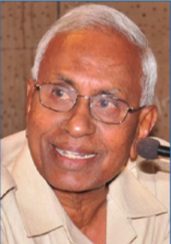 Low Productivity + High Corruption = Inflation – P S Ramamohan Rao, Former Governor of Tamil Nadu
India is poised to grow at a much faster rate than it has done ever before and probably become the third largest economy in terms of purchasing power parity in the next few years. The three major balance sheets: fiscal deficits, government and corporate balance sheets are in good shape. We have come a long way, but there are some issues which are worrying.
India has carried out a lot of economic reforms from 1991 but some basic reforms have been left from, government to government. Some of these are so fundamental to our prosperity and growth that at some point in the future, the government of the country will be forced to do.
Corruption is rampant…
India is a low productivity economy with a very high degree of corruption. It is not just high intensity, but also rampant. There is a very strong correlation between inflation and corruption. In a low productivity economy, for Rs 100 spent, goods with an intrinsic value of Rs 60 is produced and Rs 40 gets wasted due to leakages. Due to this leakage or corruption, one ends up buying goods worth Rs 60 for Rs 100, and this leads to high inflation. Therefore, it is very essential for us to tackle both low productivity and high corruption. Unless we address corruption, inflation would continue to raise. This would deter our ambitious growth rate and also economic and physical wellbeing of the country.
The next basic reform is required in the legal system that encompasses both judiciary and the police. The Judiciary keeps complaining against the government on the inadequate number of courts and judges. But that is not the elephant in the room. It is our archaic law. Unless we radically amend them, it is unlikely that any increase will clean the system. Similar reforms are needed in police too. Without addressing these, mere economic reforms and good policies will not be enough.
Rs 5000 for a vote!
Electoral reforms are another major concern. Recently for by-election to an assembly constituency more than Rs 1000 crore was spent. The two major contesting parties paid Rs 5,000 per vote. At this rate, one could imagine what would be the cost to conduct a general election. This itself is the root cause of corruption. Today, no one can contest in an election without Rs 50 crore. So, if the person wins, his entire preoccupation will be to recover the money. We can simplify our electoral process to how it is being done in the UK. Elections take place within 15 days of announcement while for us it is about two months. This will help to save the huge amounts spent.
Confrontation is not the way…
The next serious concern relates to federalism. Now days states are ruled by parties which are in opposition to the party at the centre. And in the last few years, there is a clamour for devolution of more power to the states. In a federal structure, real development is carried out by the state. In the current scenario of increased tussle between the state heads and the governors, I think, on merits, the governors are in the right sense to question certain policies which are not in the larger interest of the country or the state. But the manner in which the governors are going about, is reprehensible. All said and done, the chief minister is an elected representative by the people, therefore when a governor finds a deviation from certain accepted norms and principles, there should be a way of persuading the chief minister to be cautious. Confrontation is not the way.