




National Payments Corporation of India (NPCI)’s own P2M data clearly details the outline. For the bulk of merchant categories, the average transaction size sits comfortably under Rs 2000. And these are not small categories. They are exactly where India transacts the most like groceries, restaurants, pharmacies and fuel. That is where the volumes are.
Categories above and below the line
The chart below plots average transaction value across the merchant categories. Of all, only two debt collection agencies and securities brokers, cross the Rs 2000 line. Everything else, including categories you would expect to be borderline like clothing, electronics and utilities, is still below the threshold. So the loudest fear of switching back to cash economy doesn’t really hold true, at least for day-to-day UPI usage.
The two categories that do cross the line deserve a closer look. Debt collection and capital markets both carry higher average ticket sizes. But here’s the nuance: UPI autopay and mandate-based transactions are exempt from MDR and this includes debt collection EMIs, SIPs, insurance premiums and subscriptions. One-off capital market transactions attract 0.02 per cent, capped at Rs 300, which is negligible. This space is still worth monitoring, but the exemptions are doing a lot of heavy lifting already.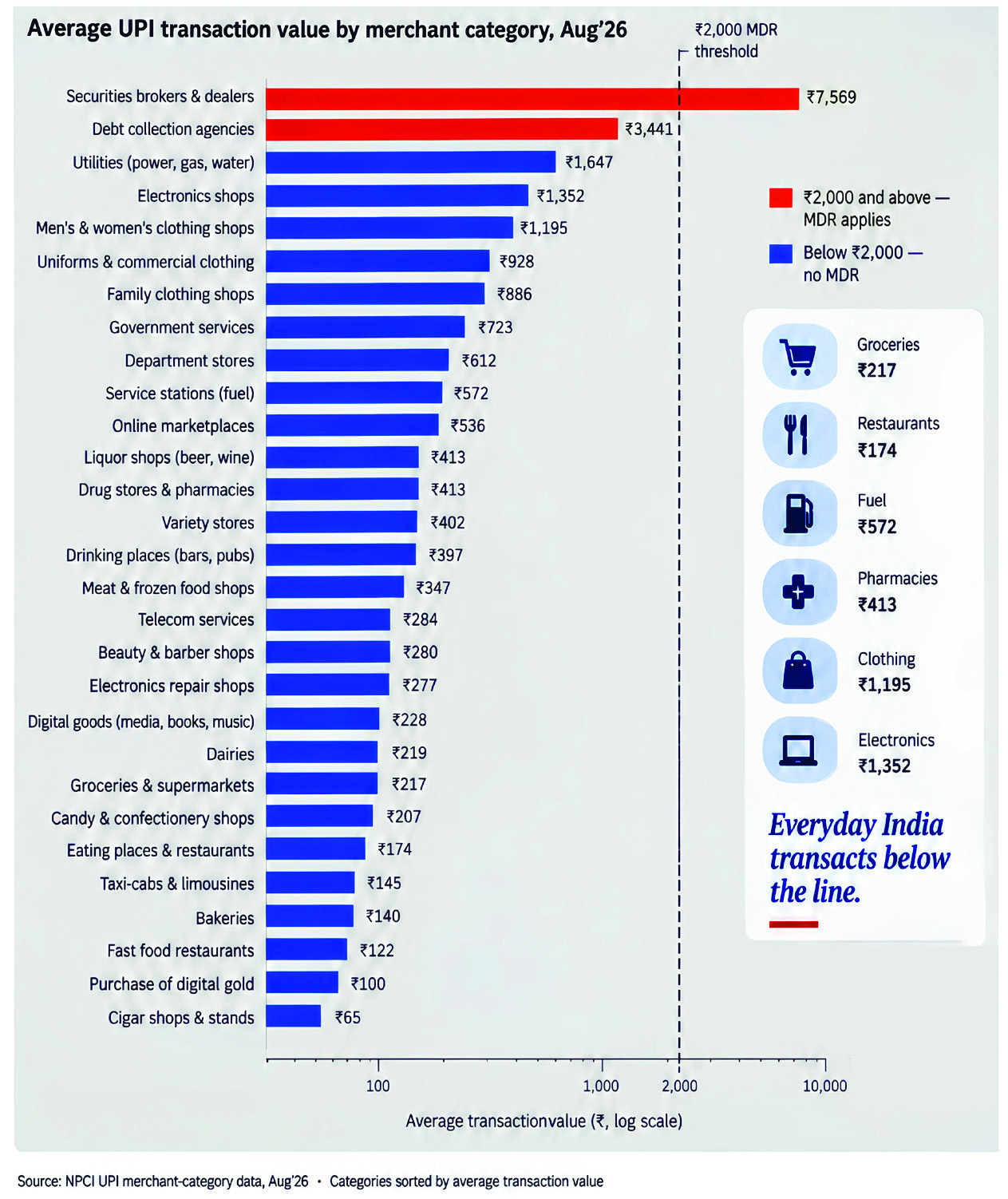
The real risk, sits somewhere in the fringe with unorganised merchants. Think single-shop electronics, clothing and jewellery stores, where ticket sizes are large enough to attract MDR and there’s no compliance machinery stopping a merchant from simply passing the cost on. A large, organised retailer will absorb and quietly adjust pricing. A small shop owner might just ask you to pay cash or add a UPI charge at the counter. And that is really all it takes for people to start second-guessing UPI and keeping cash on hand. NPCI will need to get ahead of this: educate merchants, show them the volume upside, or find other ways to soften the transition.
Beyond the debate
As a venture capitalist who has watched UPI unlock an entire generation of startups, I would love for MDR to stay at zero. But a payments ecosystem this large can’t run on a government mandate alone. The ecosystem must be able to sustain itself.
With UPI volumes rising, AI-led fraud rising right alongside them, PSPs, banks and NPCI all need to keep investing in security. That kind of investment needs a revenue line to fund it. Without one, it remains dependent on taxpayer money.
This move deserves a cautious welcome – with a close eye on how merchants, especially the smaller ones, respond over the next few months. Get this right, and India moves into a new era where convenience and innovation are finally worth paying for.
The author is Vice President of Investments at Prime Venture Partners.