



The debate surrounding India’s fuel security intensifies with every international crisis, but the problem itself is not new. While PM’s austerity measures addressed an immediate geopolitical risk, it also underscored a systemic issue: India’s escalating demand for fossil fuels.
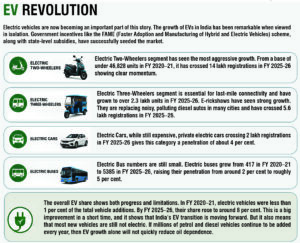
Despite the rapid expansion of renewable energy and electric mobility, India remains heavily reliant on imported oil. This dependency exposes the economy to international price volatility, increased freight costs and inflationary pressures whenever global supply chains are disrupted.
The Reality Check
The reason for our oil appetite is quite evident. As per our Envirocatalysts recent analysis, we identified the total number of registered vehicles in India jumped to over 3.07 crore in 2025-26 from about 1.83 crore in 2020-21. The trend shows that India’s transport system is still being shaped mainly by road-based mobility. Each year, more vehicles are being added increasing long-term fuel demand.
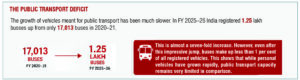
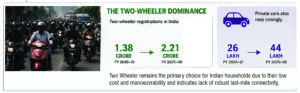
It is not just the total number of vehicles that matters, but the composition plays a key indicator in deciding the nation’s long term energy needs. According to the data, the recent surge is heavily skewed toward personal transport, which consumes fuel less efficiently than mass transport.
Need for Change
The prime minister’s call for measures towards reducing petrol and diesel use, carpooling more and using public transport becomes more important. It is not just a short-term response to global tension but projects a greater need for change. Once again, this highlights India’s fuel challenge is not only about where oil comes from, but also about how people travel every day. If this leads to better mobility planning, it could become an important turning point.
Jinitha Varghese is Program Manager at EnviroCatalysts and Sunil Dahiya is the Founder and Lead Analyst at EnviroCatalysts.

